Hook

Every major conspiracy theory in this knowledge base touches, at some point, on Jewish people, Jewish institutions, or coded language that functions as a stand-in for Jewish people. This is not accidental, and it is not the same as saying the theories are therefore false. What it requires is direct confrontation: where does legitimate critique of financial and political power end and antisemitism begin? The answer matters because the failure to ask it clearly has allowed some of the most important critical analysis of elite power to be contaminated by — and in some cases weaponised for — one of the oldest and most deadly forms of hatred in human history. This topic does not attempt to resolve every case. It maps the territory so that readers can navigate it with clear eyes.
Overview
The antisemitic thread within conspiracy theory is as old as conspiracy theory itself. The Protocols of the Elders of Zion — a document fabricated by the Russian Tsarist secret police in the early twentieth century that purported to describe a Jewish plan for world domination — became the foundational text of modern political antisemitism and shaped conspiracy thinking across the entire twentieth century. Its language, its structure, and many of its specific claims were absorbed into conspiracy theory culture so completely that many people who repeat them do not know their origin.
This topic analyses how antisemitic elements function within the broader conspiracy narrative: through explicit claims (the Protocols, the "Khazarian Mafia" theory, Zionist Occupational Government or ZOG claims); through coded language ("globalists," "international bankers," "elites" with specific names attached); and through the structural tendency of conspiracy thinking to converge on a single, identifiable enemy. It also examines where the line between legitimate institutional criticism and antisemitism runs — a line that serious researchers must hold carefully, because both false equivalence (treating all criticism of Israel or banking as antisemitism) and false separation (pretending the antisemitic current in conspiracy culture does not exist) do disservice to understanding.
Key Claims Within the Theory
The Protocols of the Elders of Zion Published in Russia in 1903 and circulated widely in the following decades, the Protocols purport to be the minutes of secret meetings of Jewish leaders planning to achieve world domination through control of media, finance, and governments. They are a fabrication — confirmed forgeries, plagiarised from an 1864 French political satire about Napoleon III that had nothing to do with Jewish people. The forgery was exposed in detail by the Times of London in 1921. Despite this, they were translated into dozens of languages, distributed by Henry Ford across the United States in the 1920s, cited by Adolf Hitler in Mein Kampf, and are still in circulation today — available on the internet, used in school curricula in several countries with poor human rights records, and cited in conspiracy communities as authentic.
The Protocols matter to this analysis not because they are credible — they are not — but because their specific claims (Jewish control of media, banking, governments; a coordinated plan for world domination; the manipulation of non-Jews through manufactured crises) are structurally identical to the claims made in the Grand Unified Conspiracy Theory about the bloodline families, the secret societies, and the control mechanisms. Whether one adopts the Protocols framework or the broader conspiracy framework, the underlying architecture of the claim is the same. The difference is the identity of the supposed controlling group.
The Khazarian Mafia Theory A more recent antisemitic conspiracy claim — popularised in the early 2000s and widely shared in conspiracy communities — holds that the majority of the world's Jewish population are not genuinely descended from the ancient Israelites of the Bible but from the Khazars: a Turkic people who inhabited a kingdom in the area of modern Ukraine, Georgia, and Russia and who converted to Judaism in the eighth or ninth century CE. The claim, extended into conspiracy territory, holds that these "fake Jews" — the Khazarian Mafia — secretly control the world's financial system, falsely claim the inheritance of the Biblical covenant to justify their actions, and are the driving force behind the New World Order agenda.
The Khazar conversion to Judaism is a real historical event, documented in medieval sources. The degree to which it affected the genetic composition of Ashkenazi Jewish communities is genuinely debated by historians. What the Khazarian Mafia theory adds to this history is: a claim that converts their descendants into a malevolent controlling class whose power is illegitimate because their Jewish identity is fraudulent. This argument has been used to argue that opposition to Israel or Zionism is not antisemitism, because — under this theory — the people involved are not "real" Jews. This is the argument's function in conspiracy culture: to allow antisemitic claims while denying that they constitute antisemitism.
ZOG — Zionist Occupational Government The ZOG claim holds that Western governments — particularly the U.S. government — are not truly sovereign but are controlled ("occupied") by Zionist interests through the lobbying power of organisations such as AIPAC (the American Israel Public Affairs Committee), the influence of Jewish-owned media, and the disproportionate representation of Jewish people in senior financial and political positions. The claim circulates across a spectrum from explicit neo-Nazi literature to more mainstream-adjacent sources that use the language of "Israeli influence" or "Zionist lobby" without the ZOG acronym.
"Globalists" as Coded Language The word "globalist" — used to describe those who favour international institutions and cross-border policy coordination over national sovereignty — is frequently applied specifically to Jewish public figures. When commentators describe specific named individuals as "globalists" while ignoring non-Jewish figures in identical roles, or when "globalist" functions specifically as a criticism attached to Jewish names, the word serves as a coded antisemitic signal. This does not mean every use of "globalist" is antisemitic; many critics of international institutions use the term without any ethnic dimension. The context and application determine whether the term is doing analytical or antisemitic work.
Kernel of Truth
The analytical challenge at the heart of this topic: some of the financial and political claims that are presented with antisemitic framing are, when stripped of that framing, accurate descriptions of real power concentrations — which happen to involve Jewish individuals among many non-Jewish individuals in comparable positions.
✅ Jewish people are statistically over-represented in senior positions in American finance, media, and academia. This is documented demographic fact. Jewish Americans constitute approximately 2% of the U.S. population but hold significantly higher proportions of senior positions in banking, law, academia, and media. The same is true in several European countries. This disproportion has historical explanations: exclusion from land ownership and guild membership in medieval Europe pushed Jewish communities toward commerce and scholarship; the educational emphasis of Jewish religious culture; and networks of mutual support that functioned like those of other diaspora communities. None of this requires or implies a conspiracy. Over-representation in achievement does not equal control through coordination.
✅ AIPAC and the Israel lobby exercise significant political influence over U.S. policy. This is documented in mainstream political science — notably in the 2007 book The Israel Lobby and U.S. Foreign Policy by scholars John Mearsheimer and Stephen Walt, both professors at major American universities. Their argument — that the Israel lobby exercises influence disproportionate to its size through campaign funding, electoral pressure, and coordinated advocacy — was controversial but engaged seriously in academic and mainstream policy debate. Legitimate analysis of the lobby's influence is not antisemitism.
✅ The Rothschild family's banking power is real. As documented in The Bloodline Families, the Rothschild banking dynasty exercised extraordinary influence over European finance in the nineteenth century. The documented history of that influence is real, regardless of how it has been mythologised and distorted by antisemitic narratives.
The critical distinction: the existence of real Jewish individuals and institutions with real power does not validate the claim that Jewish people collectively are working in coordination to dominate the world. The leap from "specific powerful Jewish institutions exist" to "a coordinated Jewish conspiracy controls everything" is the antisemitic leap. It is the same logical error that antisemitism always makes: attributing the actions of specific individuals or institutions to an entire ethnic or religious group.
Related Topics
- The Bloodline Families — Where the legitimate critique of hereditary elite power and the antisemitic mythology overlap most directly.
- The Central Banking System — The financial system that the Protocols and their successors place at the centre of alleged Jewish control.
- Mainstream Media Control — The media ownership claims that frequently carry antisemitic coding.
- Secret Societies & Organisations — The institutional network that in some versions of the theory is identified specifically with Jewish interests.
- Historical Precedents for Mass Conspiracy — Real documented conspiracies, contrasted with the fabricated Protocols.
- Why These Theories Persist — Structural reasons why conspiracy thinking tends toward identification of a single enemy group.
- Logical Structure of the Grand Theory — How unfalsifiability and scapegoating function in conspiracy thinking.
- The Grand Unified Conspiracy Theory — The meta-narrative of which antisemitic conspiracy theory is a contaminated version.
The Narrative
The Oldest Conspiracy Theory
Antisemitism is, in the analysis of historians, the world's oldest conspiracy theory. It has appeared in recognisable form for over two thousand years: Jewish people as a hidden group pursuing secret goals at the expense of their surrounding society; Jewish people as loyal to each other across borders in ways that undermine loyalty to the nations they inhabit; Jewish people as mysteriously powerful despite appearing powerless.
These themes appear in ancient Rome — where Cicero described Jewish people as a people "born for slavery," and Tacitus described them as a nation with "a stubborn attachment to each other." They appear in medieval Europe — where Jewish communities were blamed for the Black Death (1347-1351), expelled from England (1290), France (1306), and Spain (1492), and subjected to accusations of ritual murder of Christian children. They appear in Reformation-era Germany — where Martin Luther, the founder of Protestant Christianity, wrote in 1543 a text called On the Jews and Their Lies that described Jewish people as liars, blasphemers, and corrupters of society, and called for the burning of their synagogues and the confiscation of their property.
And they appear in the twentieth century — where the Protocols of the Elders of Zion, the most influential antisemitic text in history, provided the ideological framework for the systematic murder of six million Jewish people in the Holocaust.
Understanding the contemporary antisemitic thread in conspiracy theory requires understanding this historical continuity. The specific claims change across time. The underlying structure — hidden group, coordinated malevolent plan, infiltration of innocent institutions, blame for civilisational ills — does not.
Federal legislation addressing the definition and tracking of antisemitic incidents in the United States, providing the legal framework for monitoring conspiracy-motivated harassment and violence.
The Protocols: From Forgery to World Influence
In 1902 or 1903 — the exact dating is uncertain — operatives of the Russian Tsarist secret police, the Okhrana, produced a document they titled The Protocols of the Meetings of the Learned Elders of Zion. The document purports to be the minutes of a series of secret meetings in which Jewish leaders laid out a plan for world domination through control of the press, finance, and political systems.
The document was plagiarised almost entirely from a French political satire by Maurice Joly, The Dialogue in Hell Between Machiavelli and Montesquieu (1864), which had nothing to do with Jewish people — it was a fictional critique of Napoleon III's political methods, presented as a dialogue between Machiavelli and Montesquieu in hell. The Protocols' forgers replaced Machiavelli's statements with statements attributed to Jewish elders. The structural correspondence is so close that corresponding passages between the two documents were used as evidence of forgery in British courts.
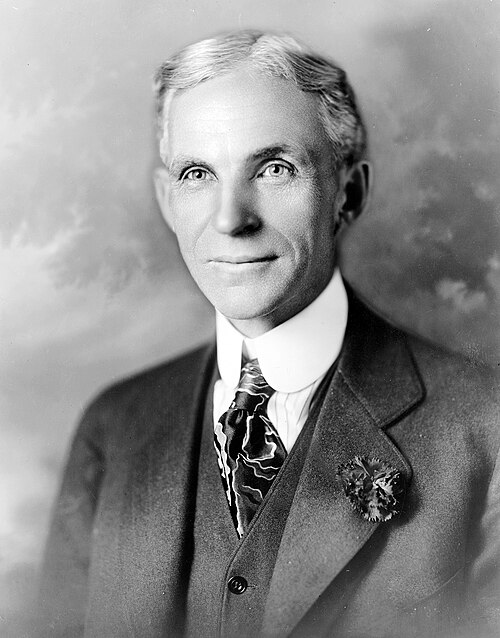
The Protocols were first published in Russia in 1903. Following the Russian Revolution, White Russian emigrants fleeing the Bolshevik government distributed them across Europe and North America. Henry Ford — one of the wealthiest men in America, with a documented lifelong antisemitism — reproduced them in his newspaper, the Dearborn Independent, from 1920 to 1922, in a series of articles later published as a four-volume set titled The International Jew: The World's Foremost Problem. Five hundred thousand copies were distributed across the United States. Adolf Hitler cited Ford directly in Mein Kampf and kept a portrait of Ford on his office wall.
The Times of London's correspondent Philip Graves demonstrated in 1921 that the Protocols were a plagiarism from Joly's work. This demonstration did not stop their circulation. They continue to circulate today.
How the Protocols Structure Functions in Modern Conspiracy Culture
The significance of the Protocols for contemporary conspiracy theory is not that people cite them directly — though some do. It is that their structural claims have been absorbed so completely into conspiracy culture that many people who would never cite the Protocols are, in practice, repeating their arguments with different names substituted.
The Protocols describe: a secret group controlling media to shape public opinion, controlling banking to control governments, manufacturing crises to produce the political conditions for their agenda, pursuing a long-term plan across generations, using other people as unwitting tools. This is structurally identical to the claims made about the bloodline families, the Illuminati, the Bilderberg Group, and the New World Order in mainstream conspiracy culture — with the names of the controlling group changed.
This does not mean that everyone who makes these claims is antisemitic, or that the underlying observations about power concentration are invalid. It means that the conspiracy theory framework has been pre-loaded with an antisemitic architecture that individual theorists must actively resist and examine, rather than uncritically adopting.
The Khazarian Mafia: Modern Antisemitism in Conspiracy Dress
The Khazarian Mafia theory is the most significant contemporary antisemitic claim operating within conspiracy culture. It was popularised primarily by writers and commentators in the early 2000s and became widely shared in online conspiracy communities.
The theory's structure:
- The Khazar kingdom (roughly 650-1000 CE), in the region of modern Ukraine and Georgia, converted its ruling class to Judaism for diplomatic reasons.
- The descendants of these converts became the Ashkenazi Jewish population of Eastern Europe.
- These "fake Jews" are not the genuine descendants of Biblical Israelites and therefore have no legitimate claim to the covenantal identity.
- This "fake" Jewish community secretly controls the global financial system, uses the legitimate Jewish people as cover, and pursues the New World Order agenda.
- Opposition to the Khazarian Mafia is therefore not antisemitism — it is opposition to fake Jews, not real ones.
Step 1 and 2 are partially grounded in historical debate. Steps 3-5 are the conspiracy addition. The argument's function is to provide a way to make antisemitic claims while denying they are antisemitic — by defining the targeted group as "fake Jews" rather than Jewish people in general.
Genetic research on Ashkenazi Jewish populations — while genuinely complex and contested — does not support the conclusion that Ashkenazi Jews are primarily descended from Khazar converts rather than from ancient Levantine populations. The Khazarian Mafia theory's historical premise is, at minimum, significantly overstated.
Where Legitimate Criticism Ends and Antisemitism Begins
This is the genuinely difficult question, and it deserves honest engagement rather than either dismissal or false precision.
Legitimate critique of institutions includes:
- Analysis of specific named individuals' exercise of power, regardless of their ethnicity or religion
- Analysis of specific institutions — banks, lobbying organisations, media companies — regardless of the ethnic composition of their leadership
- Analysis of Israeli government policy — which, like any government's policy, is subject to criticism
- Analysis of AIPAC's lobbying activities and their effects on U.S. policy — which is the subject of peer-reviewed political science
- Analysis of the Rothschild family's historical banking power — which is documented history
The antisemitic step involves:
- Attributing the actions of specific individuals to Jewish people as a collective
- Describing Jewish communities as uniformly coordinated toward a single secret goal
- Using coded language ("globalists," "international bankers") specifically applied to Jewish individuals while ignoring non-Jewish individuals in identical positions
- Adopting frameworks that require Jewish coordination as an explanatory premise
- Treating Jewish over-representation in specific fields as evidence of conspiracy rather than as a product of historical circumstances and achieved success
- Using the existence of Jewish individuals in powerful positions as evidence that Jewish people as a group control those institutions
The grey area: The hardest cases are where critics of Israel, the Israel lobby, or specific Jewish-led institutions are accused of antisemitism for making accurate claims. The 2007 Mearsheimer and Walt paper on the Israel lobby — published by mainstream academic presses and based on standard political science methodology — was attacked as antisemitic by some commentators and defended as legitimate political science by others. The argument about whether legitimate criticism of Israel or the Israel lobby constitutes antisemitism is ongoing and contested within both Jewish communities and academia.
The framework proposed here: the criterion is coordination and collective attribution. Criticism of specific policies, institutions, and individuals is legitimate political discourse. The claim that Jewish people collectively coordinate toward a secret shared agenda is antisemitism, regardless of the specific mechanism proposed.
Timeline
Evidence and the Fabricated Evidence Problem
A distinctive feature of the antisemitic conspiracy tradition is that its most cited evidence is fabricated, and this fabrication has been documented. The Protocols of the Elders of Zion are confirmed forgeries. The "Albert Pike letter" describing three world wars — in versions that attribute the third war to a conflict between Zionism and Islam — is, as noted in Secret Societies & Organisations, a likely later fabrication. The "Kalergi Plan" — an alleged document describing deliberate replacement of European populations with immigrants — is based on a severe misreading of philosopher Richard von Coudenhove-Kalergi's actual published work.
This pattern of fabricated documentary evidence is itself significant. It indicates that the antisemitic conspiracy tradition has historically required the manufacture of evidence because the actual evidence does not support the claim. This is not true of all conspiracy theories in this knowledge base — many rest on real declassified documents. The systematic reliance on fabricated documentation is a specific feature of the antisemitic strand.
Alternative Interpretations
The Mainstream Account The mainstream historical view holds that antisemitic conspiracy theories explain the recurrence of antisemitism across different cultures and eras as a function of Jewish people's social position in those societies: as a minority defined by a distinctive religion and culture, often legally prohibited from land ownership and certain professions, therefore concentrated in commerce and money-lending; as communities maintaining distinctive identity across borders, making them natural targets of accusations of divided loyalty. These social conditions produce the structural features of antisemitic conspiracy thinking regardless of actual Jewish behaviour or intent.
The Power Critique Without Ethnic Attribution A position held by many researchers who take seriously the concentration of elite power is that the ethnic and religious identity of the people who happen to occupy positions of power at any given moment is less important than the structural features of the power itself. The question "who controls the Federal Reserve?" matters less than the question "what institutional and legal constraints govern the Federal Reserve's operation?" The former question leads toward either ethnic attribution or its avoidance; the latter leads toward structural analysis that applies regardless of who holds the positions.
The False Equivalence Problem Defenders of conspiracy culture against charges of antisemitism sometimes argue that criticism of Jewish power is no different from criticism of any other ethnic or national group's power — that calling out Jewish over-representation in finance is no different from noting that the Irish dominate American Catholicism, or that Anglo-Saxons dominate British land ownership. This equivalence fails because it ignores the specific historical context: the Protocols, the Holocaust, and two thousand years of antisemitic violence that attached malevolent coordinated intent to the observation of Jewish presence in finance or media. The observation may be the same; the interpretive tradition into which it is inserted is not.
Impact & Influence
The antisemitic thread in conspiracy culture has real-world consequences that extend beyond the theoretical.
Political Violence The 2018 Pittsburgh synagogue shooting — in which a gunman killed eleven Jewish worshippers — was motivated by the shooter's belief in a conspiracy theory that HIAS (Hebrew Immigrant Aid Society, a Jewish organisation) was deliberately importing migrants to destroy white Christian America. The specific conspiracy theory (the "Great Replacement") is a contemporary version of the Protocols' claims about Jewish manipulation of population for political purposes.
Mainstreaming In 2022, the artist and businessman Kanye West (who performs as "Ye"), at that point one of the most commercially successful musicians in the world, made a series of antisemitic statements in public — including claims that Jewish people controlled the music industry and media against him — that were widely amplified across social media before major platforms restricted his accounts. The incident illustrated how conspiracy-adjacent antisemitic claims can enter mainstream celebrity discourse in ways that reach audiences who would never engage with explicit antisemitic content.
The QAnon Connection The QAnon movement — which emerged in 2017 and reached tens of millions of followers — incorporates structural elements of antisemitic conspiracy theory in its narrative of a "cabal" of Satanic child-traffickers. While QAnon does not explicitly name Jewish people as the cabal, the historical template of accusations of child murder against Jewish people (the "blood libel" of medieval Europe) is reflected in the movement's specific claims, and surveys of QAnon believers show high correlation with antisemitic beliefs.
Conclusion / Current Status
The antisemitic thread in conspiracy culture is not an accidental contamination of otherwise neutral analysis. It is the result of a long historical entanglement between legitimate critique of concentrated power and an ancient prejudice that has always required a coordinating secret enemy. That entanglement does not make the critique of power invalid — it makes the question of who is named as the coordinating group critically important.
The most important practical guidance this topic can offer: any analytical framework that requires Jewish people, or institutions identified primarily by Jewish leadership, to explain the operation of elite power is doing antisemitic work — regardless of whether the people using the framework are aware of this or consider themselves antisemitic.
Real concentrations of power exist. Real institutions require critique. Real individuals exercise real influence and deserve to have that influence examined. None of this requires attributing coordinated malevolent intent to an entire ethnic or religious community. The moment analysis crosses that line, it has left the territory of political critique and entered the territory of prejudice.
The question this knowledge base poses throughout — who has power, how is it exercised, and in whose interest — is important and legitimate. It can be answered without attributing power to ethnic or religious groups as such. When it is answered that way, it becomes stronger, not weaker.
🔬 LAYER 3: DEEP DIVE

▶ DEEP DIVE: The Protocols — From Forgery to Holocaust
The journey of the Protocols of the Elders of Zion from a crude government forgery to the ideological foundation of a genocide is one of the most instructive cases in the history of disinformation.
The Source Document Maurice Joly's Dialogue in Hell Between Machiavelli and Montesquieu (1864) was a satirical attack on Napoleon III disguised as a philosophical dialogue. Napoleon III's secret police arrested Joly, and most copies of the book were confiscated. The book was largely forgotten until it was plagiarised to create the Protocols.
The structural correspondence is remarkable: approximately 160 of the Protocols' 240 pages are directly plagiarised from Joly, with "Jewish leaders" substituted for Machiavelli. When Philip Graves of the Times of London placed the two texts side by side in 1921, the plagiarism was obvious to any reader.
The Production The Protocols were produced in Russia in the early 1900s by operatives of the Okhrana — the Tsarist secret police — as part of a campaign to blame Jewish people for the social unrest that was threatening the Tsarist regime. The specific individuals responsible are not definitively known; the most likely candidates are Pyotr Rachkovsky, head of the Okhrana's foreign operations, and Matvei Golovinski, an Okhrana operative who worked in Paris at the time.
The Protocols were first published in Russia in 1903, in a newspaper called Znamya ("The Banner"). In 1905, they were appended to a religious text by mystic Sergei Nilus, which gave them wider circulation within Russia's conservative religious community.
The Henry Ford Distribution Henry Ford's antisemitism was not casual. He believed sincerely that Jewish people were the source of America's moral and cultural degradation. From 1920 to 1927, Ford used his Dearborn Independent newspaper — which had a circulation of 700,000 and was available at Ford dealerships across America — to publish antisemitic content. The first 91 issues of the antisemitic series were collected in a four-volume set: The International Jew: The World's Foremost Problem.
Ford distributed 500,000 copies of this set across the United States and translated versions across Europe. Hitler told a Detroit News reporter in 1931: "I regard Henry Ford as my inspiration." A copy of Ford's work was visible in Hitler's Munich office when he was photographed there.
The Nazi Use The Nazis used the Protocols extensively as ideological justification. They were required reading in German schools. Joseph Goebbels — Hitler's Minister of Propaganda — praised them repeatedly. Julius Streicher — the editor of the violently antisemitic newspaper Der Stürmer and the publisher of antisemitic children's books — cited the Protocols as authentic at his Nuremberg trial, even as he was being convicted of crimes against humanity.
The Post-War Survival Despite the Holocaust demonstrating in the most extreme possible terms where the Protocols' ideology leads, the document has never been fully eradicated. It is currently in print in multiple countries, widely available online, included in school curricula in several countries, and distributed by governments including those of Iran and Saudi Arabia. A 2012 poll found that approximately one-third of people in several Arab countries believed the Protocols described genuine Jewish plans.
▶ DEEP DIVE: The Mearsheimer-Walt Debate — Where Legitimate Critique Lives
In 2006, professors John Mearsheimer of the University of Chicago and Stephen Walt of Harvard University published a paper titled "The Israel Lobby and U.S. Foreign Policy" in the London Review of Books. An extended version was published by Harvard's Kennedy School of Government and subsequently expanded into a book by the same title (2007, Farrar, Straus and Giroux).
The Argument Mearsheimer and Walt argued that:
- The United States provides Israel with a level of material and diplomatic support that is unmatched in its relationship with any other country.
- This support is not easily explained by strategic interest, as Israel's behaviour sometimes creates problems for broader U.S. strategic goals.
- The explanation lies in the effectiveness of what they termed "the Israel lobby" — a loose coalition of individuals and organisations including AIPAC, Christian Zionist groups, and pro-Israel voices in media and academia — that systematically advocates for pro-Israel policy.
- This lobby uses standard political tools: campaign contributions, electoral pressure, think tank funding, and coordinated advocacy.
They explicitly stated that they were not arguing that Jewish Americans are disloyal, that the lobby constitutes a conspiracy, or that its advocacy is illegitimate — any domestic group has the right to advocate for policies it supports.
The Response The paper and book generated extraordinary controversy. Harvard removed the Kennedy School seal from the paper after initial publication. Several prominent critics accused Mearsheimer and Walt of antisemitism or of providing intellectual cover for antisemitism. Abraham Foxman, the director of the Anti-Defamation League (ADL), called the book "a classical conspiratorial anti-Semitic analysis dressed up in academic garb."
Defenders — including Noam Chomsky, Tony Judt, and numerous political scientists — argued that the book was standard political science analysis and that the accusations of antisemitism were attempts to suppress legitimate analysis of a powerful lobby.
What the Debate Illustrates The Mearsheimer-Walt controversy illustrates the genuine difficulty of the territory mapped in this topic. Their argument — that a specific lobby exercises disproportionate influence over U.S. policy through legal political means — is structurally different from the antisemitic claim that Jewish people collectively control U.S. policy through secret coordination. Whether that difference is sufficient, and whether the book's framing inadvertently reinforced antisemitic tropes, is a contested question on which serious people disagree.
What is clear: the existence of this debate demonstrates that the line between legitimate institutional critique and antisemitism is genuinely contested, that the contestation itself is politically loaded, and that neither reflexive dismissal ("all criticism is antisemitism") nor reflexive defence ("all criticism is legitimate") does justice to the complexity.
▶ DEEP DIVE: Coded Language in Contemporary Conspiracy Culture
One of the most practically important aspects of this topic for readers of conspiracy content is the recognition of coded language — terms that function as antisemitic signals in specific contexts while maintaining plausible deniability.
"Globalists" The term "globalist" in its legitimate usage describes people who favour international institutions, global trade agreements, and cross-border cooperation over national sovereignty. In this sense, it is a real position in international relations theory, contrasted with "nationalists" or "sovereigntists."
In its coded antisemitic usage, "globalist" is applied specifically to Jewish people, while non-Jewish advocates of identical positions are described differently. When commentators describe specific Jewish individuals as "globalists" — George Soros, Paul Krugman, Janet Yellen — while not applying the term to non-Jewish internationalists in comparable positions, the term is doing ethnic rather than ideological work.
"International Bankers" and "Banksters" Both terms have legitimate analytical uses: describing banks that operate across multiple jurisdictions, or criticising the banking industry. Both are also used with specific antisemitic meaning in conspiracy literature descended from the Protocols tradition, where "international banker" is a shorthand for Jewish banker.
"The Cabal" The word "cabal" has a specifically Jewish etymology — it derives from Kabbalah, the Jewish mystical tradition — and its use to describe a secret controlling group has historically carried antisemitic connotation. In contemporary usage, it is often used without antisemitic intent; whether it carries antisemitic meaning depends on context.
"Khazarian" and "Ashkenazi" as Insults The use of "Khazarian" or sometimes "Ashkenazi" as markers of illegitimate Jewish identity — as in "the Khazarian Mafia" — is specifically antisemitic in intent: it attempts to delegitimise Jewish identity by claiming the group is not "really" Jewish.
Named Individuals as Proxies A common pattern in conspiracy content: naming specific Jewish individuals — George Soros, the Rothschild family, Klaus Schwab (whose Jewish heritage is cited despite his non-Jewish name) — as the controlling agents of global events, while ignoring non-Jewish individuals in structurally identical positions. The selectivity is the signal. When analysis consistently names Jewish individuals for roles in which non-Jewish individuals also participate, the selection criterion is not analytical — it is ethnic.
How to Read for This A practical test for coded antisemitism in conspiracy content: when a list of named individuals is presented as "the people who control [institution/event/agenda]," ask whether the list would look different if it were constructed on purely functional criteria — selecting the most powerful people in the relevant domain — rather than ethnic ones. If the list tracks ethnicity rather than power, it is doing antisemitic work.
FBI annual hate crime data showing antisemitic incidents as consistently the largest category of religiously motivated hate crimes in the United States.
Sources & Further Reading
Key Books
- Norman Cohn, Warrant for Genocide: The Myth of the Jewish World Conspiracy and the Protocols of the Elders of Zion (1967) — definitive scholarly analysis
- Hannah Arendt, The Origins of Totalitarianism (1951) — Part I: Antisemitism
- Richard Evans, The Third Reich Trilogy (2003-2008) — full context for how the Protocols informed Nazi ideology
- John Mearsheimer and Stephen Walt, The Israel Lobby and U.S. Foreign Policy (2007)
- Daniel Goldhagen, Hitler's Willing Executioners (1996)
- Neil Baldwin, Henry Ford and the Jews: The Mass Production of Hate (2001)
Primary Sources
- The Protocols of the Elders of Zion — available for examination at archive.org (multiple editions)
- Maurice Joly, Dialogue in Hell Between Machiavelli and Montesquieu (1864) — the plagiarism source document; available at archive.org
- Philip Graves, "The Truth About the Protocols: A Literary Forgery," The Times of London, August 16-18, 1921
- Henry Ford, The International Jew: The World's Foremost Problem (1920-1922) — available at archive.org (for research purposes)
Academic Papers
- David Redles, "Nazi End Times: The Third Reich as Millenarian Movement," in End of Days: Essays on the Apocalypse from Antiquity to Modernity (2016)
- Will Eisner, The Plot: The Secret Story of the Protocols of the Elders of Zion (2005) — graphic novel format; accessible summary
Official Resources
- United States Holocaust Memorial Museum: ushmm.org — extensive documentation on Protocols and Nazi ideology
- Yad Vashem (Israel Holocaust Remembrance Authority): yadvashem.org
- Anti-Defamation League: adl.org — contemporary tracking of antisemitic conspiracy claims
Library of Congress documentation of the Protocols' origins as a plagiarism of Maurice Joly's 1864 satirical novel "The Dialogue in Hell Between Machiavelli and Montesquieu," demonstrating the fabricated nature of the foundational antisemitic conspiracy text.
The USHMM's documentation of how antisemitic conspiracy theories — including the Protocols — were systematically promoted and institutionalized in Nazi Germany, tracing the path from conspiracy pamphlet to state genocide.