Hook
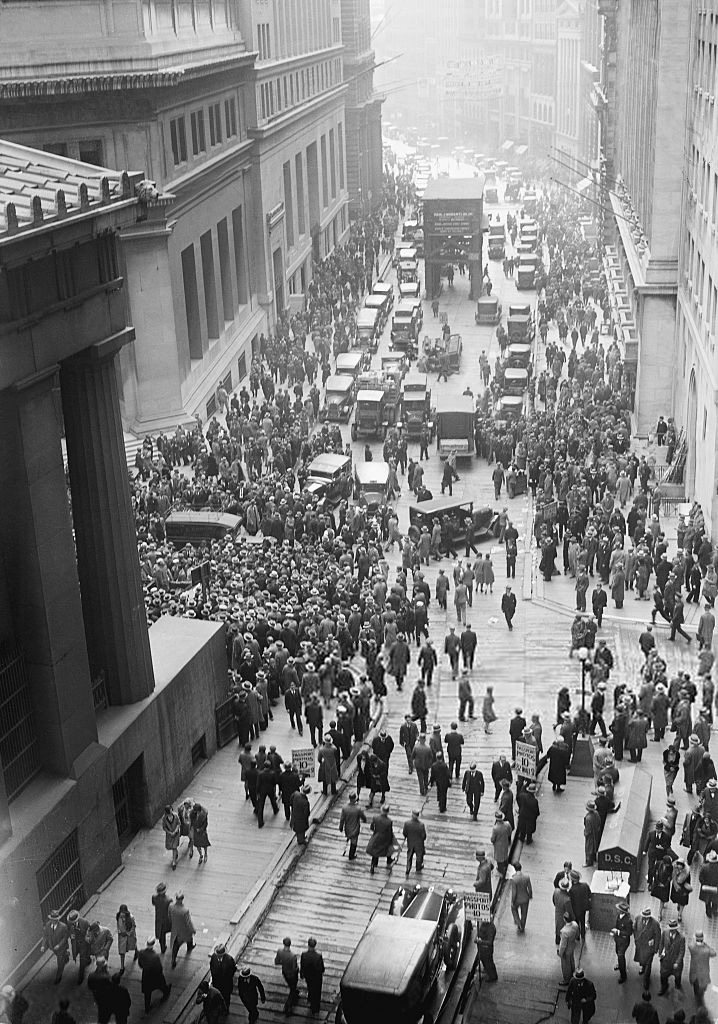
The 2008 global financial crisis wiped out $11 trillion in household wealth in the United States alone. Millions of people lost their homes, their savings, and their jobs. The banks whose reckless lending created the crisis received $700 billion in government bailouts and then paid their executives record bonuses. Within five years, the same banks were larger than before. The conspiracy theory does not just ask why this happened. It asks whether it was supposed to happen — whether financial crises, far from being catastrophic failures of the system, are features of the system, engineered by those who understand that economic destruction, like war, creates the conditions for the transfer of wealth from the many to the few, and of power from democratic governments to unelected financial institutions.
Overview
The engineered financial events theory holds that the major economic crises of the past century — the Great Depression (1929-1939), the Nixon Shock (1971), Black Monday (1987), the dot-com crash (2000), and the 2008 financial crisis — were not random market failures but deliberate operations. The mechanism varies by event: sometimes a credit expansion deliberately followed by contraction (the classic boom-bust), sometimes the strategic manipulation of a market at a critical moment, sometimes the creation of artificial asset bubbles through regulatory capture and regulatory removal. The common thread is that in every case, the people who understood what was coming were positioned to profit from it, and the resulting wealth transfer and political consequences served identifiable elite interests.
The theory also reaches back further: the sinking of the Titanic in 1912 — which killed several prominent opponents of the Federal Reserve — and the deliberate engineering of the banking panic of 1907 (which provided the pretext for creating the Federal Reserve six years later) are included in the canon of engineered financial events.
Key Claims
The Great Depression Was Engineered The Federal Reserve, created in 1913, presided over an enormous credit expansion in the 1920s — the "Roaring Twenties." Easy money created a speculative bubble in stocks and real estate. When the bubble burst in 1929, the Federal Reserve — rather than expanding credit to stabilise the banking system — deliberately contracted the money supply. Between 1929 and 1933, the Federal Reserve allowed one-third of all U.S. banks to fail without intervention, reducing the money supply by 30%. The result was the Great Depression. Federal Reserve Chairman Ben Bernanke acknowledged at Milton Friedman's 90th birthday celebration in 2002: "Regarding the Great Depression. You're right, we did it. We're very sorry. But thanks to you, we won't do it again."
The Titanic and the Federal Reserve's Opponents The RMS Titanic sank on April 15, 1912 — one year before the Federal Reserve was created. Among the 1,517 who died were three of the wealthiest opponents of a U.S. central bank: Benjamin Guggenheim (heir to the Guggenheim mining fortune), Isidor Straus (owner of Macy's department store), and John Jacob Astor IV (the wealthiest person on board, worth approximately $85 million in 1912). J.P. Morgan — a primary architect of the Federal Reserve plan — had booked passage on the Titanic but cancelled at the last minute. Conspiracy theorists argue the ship that sank was actually the Olympic (the Titanic's damaged sister ship) as part of an insurance fraud, and that the deaths of the Fed's opponents were either intentional or opportunistically exploited.
The 2008 Crisis Was a Controlled Demolition The deregulation of the U.S. financial system — beginning with the repeal of the Glass-Steagall Act (which had separated commercial and investment banking since 1933) in 1999, continuing with the Commodity Futures Modernization Act (2000), which exempted derivatives from oversight — was not an accident. The firms that created the toxic mortgage securities knew they were worthless. Goldman Sachs sold mortgage-backed securities to clients while simultaneously betting against those same securities — a practice documented in the Senate Permanent Subcommittee on Investigations report (2011). The crisis transferred wealth upward on an unprecedented scale and produced TARP (the Troubled Asset Relief Programme) — a $700 billion bank bailout — and quantitative easing, which inflated asset prices, benefiting those who owned assets while wages stagnated for everyone else.
National Debt as a Control Mechanism Government debt is not an accidental consequence of overspending — it is the mechanism through which the central banking system maintains leverage over governments. A government that is perpetually in debt to bond markets must maintain the confidence of those markets in its fiscal management — meaning it must prioritise debt service over social spending, must avoid policies that bond markets disfavour, and must accept austerity conditions when the markets demand them. The IMF and World Bank impose explicit policy conditions on countries they lend to. Bond markets impose implicit conditions on all governments. The result: democratically elected governments answer not to their voters but to their creditors.
Senator Carl Levin's 650-page investigation documenting how Goldman Sachs and other institutions profited from mortgage securities they simultaneously bet against — the documented foundation for manufactured crisis claims.
Kernel of Truth
✅ The Federal Reserve's actions during the Great Depression contributed to its severity. Ben Bernanke's statement is documented fact — he acknowledged at Friedman's 90th birthday dinner (2002) that the Federal Reserve's policy failures deepened the Depression. The monetary contraction of 1929-1933 is documented in economic history and is the subject of Friedman and Schwartz's A Monetary History of the United States (1963), which is mainstream economics.
✅ J.P. Morgan cancelled his Titanic reservation at the last minute. This is documented in historical records. Whether this was coincidence, precaution, or foreknowledge is unknown.
✅ Goldman Sachs bet against mortgage securities it sold to clients. This is documented in the Senate Permanent Subcommittee on Investigations' 2011 report, Wall Street and the Financial Crisis. Goldman Sachs paid $550 million to settle SEC fraud charges in 2010 without admitting wrongdoing.
✅ Glass-Steagall repeal preceded and enabled 2008. The 1999 repeal of Glass-Steagall — signed by President Clinton and supported by Treasury Secretary Robert Rubin (a former Goldman Sachs chairman) and his successor Lawrence Summers — allowed commercial banks to engage in investment banking activities. Robert Rubin joined the board of Citigroup immediately after leaving the Treasury, at a compensation of approximately $115 million over the following decade, while Citigroup engaged in exactly the practices his deregulation had permitted.
✅ The 2008 bailout transferred wealth to banks that caused the crisis. The Congressional Oversight Panel for TARP, led by Elizabeth Warren (now a U.S. Senator from Massachusetts), documented that the Treasury paid above-market prices for bank assets in the bailout. The Federal Reserve's emergency lending — $16 trillion, revealed by the 2011 audit — went almost entirely to financial institutions.
Related Topics
- The Central Banking System — The institutional framework through which financial events are engineered.
- The Bloodline Families — The banking dynasties positioned to profit from engineered crises.
- Problem-Reaction-Solution — The general method of which financial crises are one application.
- Corporate Consolidation — How financial crises accelerate corporate concentration.
- The Great Reset & Agenda 2030 — The 2008 crisis as preparation for the next phase of financial transformation.
- Resource Control & Suppressed Technology — The relationship between financial control and resource control.
- Historical Precedents for Mass Conspiracy — Documented elite coordination in financial history.
The Narrative
The Logic of Engineered Crisis
To understand why conspiracy theorists believe financial crises are engineered rather than accidental, begin with the observable consequence of every major financial crisis: wealth transfers upward.
In every significant financial crisis of the past century, the sequence has been consistent: a period of credit expansion creates asset bubbles; the bubble collapses; ordinary people lose homes, savings, and jobs; banks and financial institutions with advance positioning — either in short positions against the collapsing assets, or in safe havens, or in cash available to buy distressed assets at low prices — emerge wealthier than before; regulatory and political changes that follow the crisis consistently favour the financial interests that caused it.
This pattern could result from: (1) inevitable market dynamics in which the sophisticated always profit from volatility at the expense of the unsophisticated; (2) ordinary elite self-interest that naturally positions itself for outcomes it can see coming before others can; (3) deliberate engineering of crises designed from the outset to produce the consequences they achieve.
The conspiracy theory claims option 3. The mainstream account claims option 1 or 2. The evidence is, in many cases, consistent with all three interpretations.
The Panic of 1907 and the Creation of the Federal Reserve
The Panic of 1907 is the crisis that conspiracy researchers most convincingly argue was engineered — because it directly produced the Federal Reserve.
In October 1907, a failed attempt to corner the copper market triggered a collapse of Knickerbocker Trust Company — one of New York's largest financial institutions. The failure created a panic in which depositors rushed to withdraw funds from banks across the country. Bank runs spread. The financial system began seizing.
The rescue came not from any government institution — there was no central bank — but from J.P. Morgan personally. Morgan assembled the most powerful bankers in New York in his private library and effectively ordered them to provide capital to stabilise the banking system. He determined which institutions would be saved and which would be allowed to fail. He executed the rescue with the efficiency of a man who understood the situation completely.
The crisis produced the exact consequence that banking interests had been seeking for years: a congressional mandate to create a central banking institution. The panic of 1907 provided the political cover for the Federal Reserve — an institution that would, among other things, serve as a lender of last resort and prevent panics like 1907 from recurring.
The conspiracy question: did J.P. Morgan engineer the panic to produce this outcome? The documented evidence shows that Morgan's positioning during the crisis was remarkably well-suited to his interests. The historical evidence does not definitively establish intentionality. But the pattern — crisis produces desired institutional change, most sophisticated actor benefits — is the template for every subsequent case in the conspiracy narrative.
The Great Depression: Contraction as Policy
Milton Friedman and Anna Schwartz, in A Monetary History of the United States, 1867-1960 (1963), established the mainstream economic consensus: the Federal Reserve's failure to expand the money supply during the banking panics of 1930-1933 transformed what might have been a severe recession into the Great Depression. Between 1929 and 1933, the Federal Reserve allowed the money supply to contract by approximately 30%. One-third of all American banks failed.
This analysis — now mainstream economics — established that the Federal Reserve's policies made the Depression vastly worse than it needed to be. What mainstream economics treats as a policy failure, conspiracy researchers treat as policy success: the banking consolidation that resulted from the Depression eliminated thousands of small banks and concentrated banking power in the institutions that survived. The Rockefeller-connected Chase National Bank emerged from the Depression stronger than before.
Senator Louis McFadden, chairman of the House Banking and Currency Committee, stated on the floor of Congress in 1934: "It was not accidental. It was a carefully contrived occurrence. The international bankers sought to bring about a condition of despair here so they could emerge as rulers of us all." McFadden was subsequently the target of two assassination attempts — both missed — and died in 1936 under circumstances his associates considered suspicious.
The Nixon Shock: The End of Gold
The 1971 removal of dollar-gold convertibility — the "Nixon Shock" — is described in most historical accounts as a pragmatic response to an unsustainable situation: U.S. gold reserves were being depleted as countries demanded gold for their dollars. The conspiracy framing asks: if this was simply pragmatic, why was it done without any international consultation, in secret, over a single weekend?
Nixon and his senior advisers — including Treasury Secretary John Connally and economist Arthur Burns — gathered at Camp David (the presidential retreat in Maryland) on August 13, 1971. Congress was not informed. Allies were not consulted. The announcement came Sunday evening, August 15 — when financial markets worldwide were closed, preventing any orderly response.
The result was the end of the gold standard globally, the creation of a pure fiat currency system, and — three years later — the petrodollar arrangement that replaced gold with oil as the dollar's backing. The conspiracy claim is that this sequence was planned: remove the gold constraint, then establish a oil-based constraint that the United States controls militarily rather than through its stock of a physical metal.
2008: The Controlled Demolition
The 2008 financial crisis is the most extensively documented example in the conspiracy canon, because the Senate investigation that followed it produced an 800-page report that reads, in places, like a conspiracy theorist's primary source.
The Senate Permanent Subcommittee on Investigations' 2011 report — Wall Street and the Financial Crisis: Anatomy of a Financial Collapse — documents in detail:
The mortgage fraud pipeline: Mortgage originators systematically approved loans to borrowers who could not afford them, then sold those loans to investment banks, who packaged them into securities and sold them to investors. The originators did not care about loan quality because they immediately sold the loans; the banks did not care about security quality because they sold the securities; rating agencies gave high ratings to securities they had not properly analysed, in exchange for rating fees paid by the banks.
Goldman Sachs's dual role: Goldman Sachs packaged and sold $40 billion in mortgage-backed securities to clients. Simultaneously, Goldman was building short positions — bets that mortgage securities would decline in value — through synthetic instruments. The report documents emails from Goldman traders celebrating the collapse of securities they had sold to clients. The report found that Goldman "used net short positions to benefit from the downturn in the mortgage market, and designed, marketed, and sold CDOs in ways that created conflicts of interest with the firm's clients." Goldman paid $550 million to settle — without admitting guilt — which amounted to approximately 14 days of 2010 revenue.
Regulatory capture: The regulatory agencies that should have prevented the crisis — the SEC (Securities and Exchange Commission), the OCC (Office of the Comptroller of the Currency), the Federal Reserve — had been systematically weakened through legislative deregulation (Glass-Steagall repeal, 1999; Commodity Futures Modernization Act, 2000) and through the appointment of regulators who were ideologically opposed to regulation.
The bailout terms: When the crisis hit, Treasury Secretary Henry Paulson — a former CEO of Goldman Sachs — designed the bailout that transferred $700 billion to the banking system. The terms of TARP were remarkably favourable to banks: the Treasury received preferred shares but not common equity, limiting its ability to influence bank governance. The Emergency Stabilisation Act was presented to Congress with the warning that markets would collapse within days without it — creating the panic-driven legislative environment that suppressed scrutiny of the terms.
Timeline
Evidence Claimed
The Rothschild Waterloo Precedent The financial strategy allegedly used by Nathan Rothschild after Waterloo — receiving advance intelligence of Napoleon's defeat and profiting from the market's ignorance — represents, for conspiracy researchers, the archetype of the engineered financial event. Whether or not the specifics are accurate (historians debate the degree of the profit and the mechanism), the principle — that advance knowledge of significant events creates extraordinary profit opportunities — is undeniable. Anyone who knew with certainty what was coming in 2007 and positioned accordingly made fortunes. Several did.
Goldman Sachs's Short Positions The Senate report's documentation of Goldman Sachs simultaneously selling mortgage securities to clients and betting against the mortgage market is the most concrete single-institution evidence in the conspiracy canon. The firm's internal emails — disclosed in the Senate investigation — include comments from traders expressing enthusiasm about the mortgage market's decline, describing the securities they were selling as "shitty deals."
The Timing of Deregulation The Glass-Steagall repeal was signed by President Clinton on November 12, 1999. The Commodity Futures Modernization Act — which exempted credit default swaps from oversight — was signed on December 21, 2000. The 2008 financial crisis was significantly enabled by instruments that these two pieces of legislation permitted. The Treasury secretaries who signed the deregulation — Robert Rubin (former Goldman Sachs chairman) and his protégé Lawrence Summers — both went on to lucrative careers in the financial sector after government service.
The Speed of Institutional Capture Post-Crisis Following the 2008 crisis, the five largest U.S. banks — which were "too big to fail" and were bailed out — grew larger. By 2012, the top five banks held assets equal to 56% of U.S. GDP, compared to 43% in 2008. The crisis that mainstream analysis attributed to excessive banking concentration produced, within four years, greater banking concentration. Conspiracy researchers argue this is the intended outcome.
The official US government investigation into the causes of the 2008 financial crisis, including findings on regulatory failures, risk concentration, and the role of financial institutions in creating and concealing systemic risk.
Alternative Interpretations
The Mainstream Account: Systemic Risk Without Intention The mainstream account holds that financial crises are the result of systemic failures — individually rational decisions that produce collectively catastrophic outcomes — rather than deliberate engineering. Bank executives who sold mortgage securities they knew were problematic were prioritising short-term profit without intending to cause a systemic collapse that would also threaten their institutions and their net worth (most bank executives suffered substantial losses on their own stock holdings in 2008). The regulatory failures reflect ideological commitment to free markets rather than deliberate sabotage.
The Complexity Argument Financial systems are extraordinarily complex. Interventions that seem rational at one point produce unanticipated consequences. The Federal Reserve's 1930-1933 policies may reflect genuine uncertainty about the right response to a banking panic — the economics of deflationary spirals were not well understood at the time — rather than deliberate contraction. Central bankers make mistakes. The conspiracy claim requires that what appear to be mistakes were deliberate choices whose consequences were accurately foreseen.
The Profit Motive Is Sufficient A strong alternative to the conspiracy framing: ordinary profit motive explains most of what the theory attributes to deliberate engineering. Banks do not need to conspire to create conditions that benefit banks. They simply pursue profit individually, and the collective result of each bank pursuing profit is the system that the theory describes. No coordination or engineering is required — only the natural dynamics of competitive capitalism operating within a regulatory framework that banks have successfully captured.
Impact & Influence
The engineered financial events theory has produced significant real-world political consequences.
The Occupy Wall Street movement (2011) — which spread from New York to hundreds of cities worldwide — was built around the premise that the 2008 crisis represented deliberate looting of the public by the financial class. Its core slogan — "We Are the 99%" — reflected the conspiracy theory's central claim: that the economy is operated in the interest of an extreme minority at the expense of everyone else.
Bitcoin (launched 2009) was explicitly designed as a response to the 2008 crisis. The Bitcoin white paper (published October 2008, one month after the Lehman collapse) begins with a reference to a January 2009 Times of London headline: "Chancellor on brink of second bailout for banks." The timestamp embedded in Bitcoin's first block of transactions contains this headline — a statement of purpose. Satoshi Nakamoto (the pseudonymous Bitcoin creator) described Bitcoin as a system for electronic transactions "without relying on trust" — the explicit target being the trusted-third-party problem that banks represent.
The 2008 crisis arguably created the political conditions for both the Trump and Sanders movements in the United States, both the Corbyn movement and Brexit in the United Kingdom, and numerous European populist movements — all of which, in different ways, expressed the conviction that the mainstream political-economic system had failed ordinary people in favour of a wealthy elite.
Conclusion / Current Status
The engineered financial events theory is in a peculiar evidential position: the documented facts — Goldman Sachs's conflicts of interest, the deregulation pipeline, the bailout terms, the subsequent wealth concentration — are disturbing enough without the conspiracy interpretation. The Senate's own 800-page investigation reads as an indictment of deliberate fraud. The question the theory adds — whether all of this was coordinated in advance to produce planned outcomes — adds an intentionality layer that the evidence supports circumstantially but does not prove conclusively.
What the documented record establishes is that: the banking industry systematically bent and broke rules to profit from the mortgage bubble; the regulatory system was deliberately weakened through industry lobbying; the crisis that resulted primarily harmed the general population while the industry received public subsidies; and the political consequences — the bailout, regulatory changes, and subsequent monetary policy — served banking interests. Whether this was conspiracy or coincidence is the interpretive question.
The theory's lasting contribution is to insist that "accident" is an insufficient explanation for a pattern this consistent across multiple events and multiple decades. Friedman called the Depression a policy failure. The Senate called 2008 a governance failure. At what point does a consistent pattern of failures that systematically benefit the same class cease to look like failure?
🔬 LAYER 3: DEEP DIVE

▶ DEEP DIVE: The Titanic — Insurance Fraud and the Elimination of Fed Opponents
The Titanic conspiracy theory occupies a specific place within the engineered financial events narrative because of its timing — April 1912, fourteen months before the Federal Reserve Act was signed — and the identity of its most prominent victims.
The Three Key Deaths Benjamin Guggenheim (1865-1912) was the son of Meyer Guggenheim and a partner in the Guggenheim mining and smelting empire. His family's wealth represented exactly the kind of independent industrial fortune that was fiercely opposed to banking monopoly.
Isidor Straus (1845-1912) was a German-born American businessman who, with his brother Nathan, owned Macy's department store — at the time the world's largest. He served as a U.S. Congressman and was known as a voice for restrained government and independent commerce. He and his wife Ida chose to stay together on the Titanic as it sank rather than separate.
John Jacob Astor IV (1864-1912) was the wealthiest person on board, with a fortune estimated at $85-150 million — equivalent to several billion dollars today. He was an inventor, real estate developer, and builder of the Astoria Hotel (later the Waldorf-Astoria). He returned from a honeymoon voyage with his pregnant young wife (who survived; he did not).
All three were among the most prominent opponents of central banking in America.
J.P. Morgan's Cancellation J.P. Morgan had booked a stateroom on the Titanic. He cancelled days before departure, citing business reasons. At the time, he was staying in Aix-les-Bains, France — a spa resort — which some accounts describe as unlikely grounds for urgent business cancellation.
Morgan's cancellation is documented. Whether it reflects foreknowledge is entirely speculative — prominent wealthy people cancel travel reservations constantly, and the Titanic cancellations on the wealthy side also included Henry Frick, the steel magnate, and others with no obvious connection to the Federal Reserve debate.
The Olympic Switch Theory The most elaborate version of the Titanic conspiracy holds that the ship that sank was not the Titanic but its damaged sister ship, the Olympic, and that the sinking was an insurance fraud orchestrated by J.P. Morgan's White Star Line.
The theory's claims:
- The Olympic had been seriously damaged in a collision with HMS Hawke in September 1911 and was being repaired at the time
- The insurance on the Olympic was insufficient to cover the repair costs
- The ships were switched before the maiden voyage — the Olympic was sent out as "Titanic" to be deliberately sunk for the insurance money
- The collision with the iceberg was not accidental but engineered
The evidence cited includes supposed differences in hull markings, propeller configurations, and portholes between photographs of the ships. The theory has been examined by maritime historians and generally dismissed as inconsistent with the physical and documentary evidence. No insurance fraud claim was paid — White Star Line's claim was disputed and settled for less than the ship's value. Whether these facts refute the theory or reflect the conspiracy's successful concealment depends on interpretation.
The Mainstream Assessment Mainstream historians do not dispute that the three named men opposed central banking. They do dispute the causal connection between their deaths and the Federal Reserve's creation — the legislation was already in process before the Titanic sailed, and the death of individual wealthy opponents would not have significantly altered the political dynamics of a legislative campaign backed by the country's most powerful banking interests.
The timing is genuinely striking. The conspiracy interpretation is unproven.
▶ DEEP DIVE: Quantitative Easing — The Mechanism of Wealth Transfer
Quantitative easing (QE) — the Federal Reserve's policy of purchasing financial assets, primarily government bonds and mortgage-backed securities, to inject money into the financial system — was implemented after 2008 on an unprecedented scale. By 2014, the Federal Reserve had created approximately $4 trillion in new money through QE. Understanding its effects is central to understanding the post-2008 conspiracy argument.
How QE Works When the Federal Reserve conducts QE, it credits the reserve accounts of commercial banks with new money and receives financial assets in exchange. The commercial banks now have more reserves than they need; to deploy these reserves profitably, they lend to financial markets. Financial markets, awash in cheap money, bid up the prices of existing financial assets — stocks, bonds, real estate.
Who Benefits Asset price inflation directly benefits those who own assets. In 2012, the top 10% of American households owned approximately 80% of all stocks. The bottom 50% owned essentially none. When the stock market doubled, tripled, and quadrupled after 2009 — driven significantly by QE — the benefits accrued almost entirely to the top 10%.
At the same time, wages remained stagnant. The Federal Reserve's own research has documented that wage growth for most Americans was minimal in the decade following 2008. The combination — rising asset prices, stagnant wages — produced the greatest increase in wealth inequality in American history.
The conspiracy argument: this was the intended outcome. QE was designed to rescue the banking system and inflate asset prices. That it massively worsened wealth inequality was not an unintended consequence — it was the mechanism through which the crisis served elite interests.
The Taper Tantrum and Market Dependence By 2013, financial markets had become structurally dependent on Federal Reserve asset purchases. When then-Fed Chairman Ben Bernanke suggested that the Fed might begin "tapering" — reducing the pace of QE — markets fell sharply in what came to be called the "taper tantrum." The Federal Reserve subsequently delayed tapering in response to market pressure.
This episode revealed the extraordinary degree to which the Federal Reserve had, by its own actions, made itself unable to normalise policy without causing the market crash it was ostensibly trying to prevent. Critics described the situation as a trap of the Fed's own making. Conspiracy researchers describe it as a feature: markets permanently dependent on central bank intervention are markets permanently controlled by the central bank.
▶ DEEP DIVE: The Glass-Steagall Repeal — Who Benefited and Who Decided
The Glass-Steagall Act of 1933 — formally the Banking Act of 1933 — was enacted in direct response to the conflicts of interest that contributed to the 1929 crash. It separated commercial banking (taking deposits, making loans) from investment banking (underwriting securities, proprietary trading) on the grounds that conflicts of interest between the two activities had contributed to the banking failures of the Depression.
The act stood for 66 years. Its repeal in 1999 is, in the conspiracy narrative, the clearest example of regulatory capture — the process by which regulated industries capture the agencies and legislative processes that regulate them.
The Campaign for Repeal The campaign to repeal Glass-Steagall was led primarily by Citigroup — specifically by its chairman Sanford Weill, who in 1998 engineered the merger of Citicorp and Travelers Group to create the largest financial institution in the world. The merger was technically illegal under Glass-Steagall at the time it was announced. Weill obtained a two-year waiver from the Federal Reserve and then lobbied Congress to change the law to permit what he had already done.
Robert Rubin, who as Treasury Secretary signed the repeal legislation, joined Citigroup's board immediately after leaving government — at a total compensation over the following years of approximately $115 million. This career trajectory — deregulating an industry and then immediately taking a lucrative position in that industry — is the revolving door in its most transparent form.
Lawrence Summers, who succeeded Rubin as Treasury Secretary and also signed the legislation, subsequently received $5.2 million in speaking fees from Wall Street firms in a single year before joining the Obama administration.
What the Repeal Permitted The repeal allowed commercial banks — which have access to Federal Reserve emergency lending and FDIC deposit insurance, creating an implicit government backstop — to engage in speculative trading activities. The risk of those activities was ultimately backed by the public through the deposit guarantee and emergency lending facilities. The profits accrued privately; the losses, when they materialised in 2008, were socialised through the bailout.
Who Opposed Repeal Senator Byron Dorgan of North Dakota was one of the few senators who voted against the repeal. He warned during the Senate debate: "I think we will look back in ten years' time and say we should not have done this, but we did because we forgot the lessons of the past, and that which is true in the 1930s is true in 2010." He was right. His warning was ignored. The Senate voted 90-8 to repeal Glass-Steagall.
Sources & Further Reading
Key Books
- G. Edward Griffin, The Creature from Jekyll Island (1994)
- Joseph Stiglitz, Freefall: America, Free Markets, and the Sinking of the World Economy (2010)
- Michael Lewis, The Big Short (2010) — mainstream account of mortgage security fraud
- Charles Ferguson, Predator Nation: Corporate Criminals, Political Corruption, and the Hijacking of America (2012)
- Nomi Prins, All the Presidents' Bankers (2014) — documents Fed-government revolving door
Documentaries
- Inside Job (Charles Ferguson, 2010) — Academy Award-winning documentary on 2008 crisis
- The Big Short (Adam McKay, 2015) — dramatisation of mortgage fraud
- 97% Owned (Michael Oswald, 2012)
Primary Sources and Official Reports
- Senate Permanent Subcommittee on Investigations, Wall Street and the Financial Crisis: Anatomy of a Financial Collapse (April 2011) — 800 pages; available at hsgac.senate.gov
- GAO, Federal Reserve System: Opportunities Exist to Strengthen Policies and Processes for Managing Emergency Assistance (July 2011) — the $16 trillion audit; available at gao.gov
- Congressional Oversight Panel for TARP reports (2009-2011) — available at fraser.stlouisfed.org
- Ben Bernanke, statement at Milton Friedman's 90th birthday dinner, November 8, 2002 — available at federalreserve.gov
Academic Papers
- Milton Friedman and Anna Schwartz, A Monetary History of the United States, 1867-1960 (1963) — Princeton University Press
- Admati and Hellwig, The Bankers' New Clothes (2013) — Princeton University Press