Hook
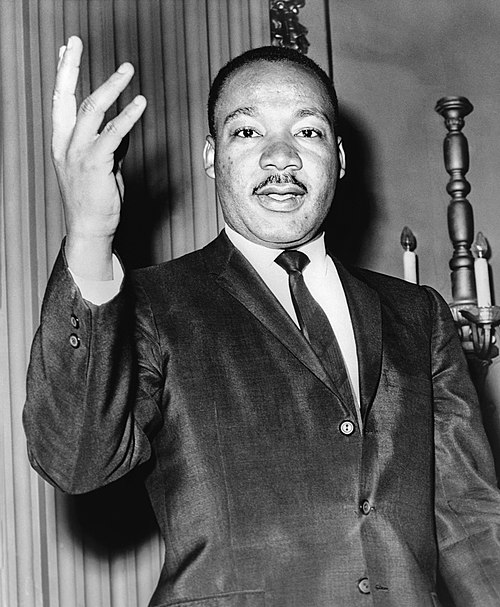
On April 4, 1968, Martin Luther King Jr. was shot on the balcony of the Lorraine Motel in Memphis, Tennessee. The official suspect, James Earl Ray, pleaded guilty and was convicted without a trial. He subsequently recanted his confession and spent the rest of his life claiming innocence. In 1999, a civil jury in Memphis — after a month-long trial hearing extensive evidence — found that Loyd Jowers and "other unknown co-conspirators" including "governmental agencies" had conspired to kill King. This was not a fringe verdict by conspiracy theorists. It was a jury finding in a civil court. It received almost no mainstream media coverage. Martin Luther King's own family accepted the verdict and has maintained for decades that James Earl Ray did not act alone. The question is why the government's own intelligence files on King's assassination — still partially classified — have not been publicly released.
The King family's official statement on the 1999 Memphis civil trial verdict finding that Loyd Jowers and "governmental agencies" had conspired to assassinate Martin Luther King Jr. — the official statement of King's family that the convicted gunman James Earl Ray did not act alone.
Overview
The MLK and Malcolm X assassination conspiracy theories hold that both leaders — who represented the most significant challenges to racial inequality and the political-economic status quo in American history — were killed with the knowledge and possible assistance of elements within the U.S. government, specifically the FBI under J. Edgar Hoover, and potentially military intelligence and organised crime networks. Both men were under intensive government surveillance at the time of their deaths. Both had made public statements about the Vietnam War that connected their civil rights leadership to the broader antiwar movement. Both had significantly expanded the scope of their challenge from racial equality to economic restructuring and international solidarity — making them threats not just to segregationists but to the financial establishment. The 1999 civil verdict in the King case and the documented COINTELPRO operations against both men make these not speculative claims but the most evidence-supported conspiracy theories in this knowledge base.
Key Claims
The FBI Ran a Documented Campaign to Destroy King COINTELPRO — the FBI's Counter Intelligence Program, confirmed by the Church Committee — specifically targeted Martin Luther King Jr. as its priority domestic target. Hoover described King as "the most dangerous Negro in America" and authorised surveillance that went far beyond monitoring: the FBI sent King an anonymous letter accompanied by audio recordings of his extramarital affairs, explicitly threatening to expose him publicly and urging him to commit suicide. This letter — documented in the Church Committee records — was sent shortly before King received the Nobel Peace Prize. The FBI's goal was King's psychological destruction and political elimination. The question is whether the programme extended to physical elimination.
The 1999 Civil Verdict Found Governmental Conspiracy In November 1999, a twelve-person civil jury in Memphis heard a month of testimony in the lawsuit King v. Jowers. The plaintiff was King's estate; the defendant was Loyd Jowers, a restaurant owner who claimed to have participated in a conspiracy to kill King. After thirty days of testimony from seventy witnesses — including former FBI and military intelligence officials — the jury found Loyd Jowers liable and found a conspiracy by governmental agencies. The Justice Department declined to pursue a criminal investigation based on the verdict. The verdict received almost no coverage in major American media.
James Earl Ray's Confession Was Coerced and Recanted James Earl Ray pleaded guilty to killing King on March 10, 1969, three days before his trial was to begin. He was sentenced to 99 years. Three days later, he recanted his confession and spent the remaining twenty-nine years of his life seeking a trial he never received. Ray consistently maintained that a man he knew as "Raoul" had directed his movements in the period leading up to the assassination and had been the actual architect of the killing. The identity of "Raoul" was investigated and never officially resolved. Dexter King — one of Martin Luther King's sons — met with James Earl Ray in prison and accepted his claim of innocence.
Malcolm X Was Killed With FBI Foreknowledge In 2021, the Manhattan District Attorney's office exonerated two of the three men convicted of Malcolm X's 1965 assassination — Muhammad Aziz and Khalil Islam — after their attorneys discovered that the FBI and the NYPD had withheld significant exculpatory evidence from their trials. Critically: the FBI possessed files showing that the real perpetrators included informants and individuals connected to government agencies, information that had been suppressed for over fifty years. The exoneration was not based on a finding that the government killed Malcolm X, but it documented a half-century of government concealment of evidence that pointed away from the convicted men.
Kernel of Truth
✅ The FBI's COINTELPRO operation against King is fully documented. The Church Committee records include the anonymous suicide letter. The programme's targeting of King is in the congressional record.
✅ The 1999 civil jury verdict finding governmental conspiracy in King's assassination is documented. The verdict is a matter of public record in Memphis federal courts.
✅ James Earl Ray recanted his guilty plea and maintained innocence until his death. This is documented in court records and journalism.
✅ The 2021 exoneration of two men convicted of Malcolm X's murder is documented. The Manhattan DA's office exonerated Aziz and Islam and documented the FBI and NYPD's suppression of evidence.
✅ Both King and Malcolm X were under intensive FBI surveillance at the time of their deaths. This is documented in COINTELPRO files and in subsequent FOIA releases.
✅ King's assassination files remain partially classified. MLK assassination records have not been fully declassified. As of 2026, some remain under classification.
Related Topics
- Intelligence & Enforcement Networks — COINTELPRO and the FBI's role in political surveillance and destabilisation.
- The JFK Assassination — The pattern of political assassination in the 1960s.
- The RFK Assassination — The third major assassination of 1968.
- Journalist & Whistleblower Deaths — Investigators of the MLK and Malcolm X cases and their fate.
- Historical Precedents for Mass Conspiracy — COINTELPRO as documented government conspiracy against civil rights leaders.
- MK-Ultra & Continuation Programs — CIA capabilities applied to domestic targets.
- Mass Psychology & Manufactured Consent — COINTELPRO as mass psychological operation against the civil rights movement.
- The Depopulation Agenda — The targeting of leaders who threatened existing power structures.
The Narrative
Why King and Malcolm X Were Threats

By the mid-1960s, both Martin Luther King Jr. and Malcolm X had moved beyond their initial political positions in ways that made them significantly more threatening to the existing power structure.
King's Evolution King's 1967 speech "Beyond Vietnam — A Time to Break Silence" was a watershed moment. He explicitly connected the Vietnam War, American militarism, and racial inequality as components of the same system — one that spent money on weapons while refusing to invest in the poor. He described the U.S. government as "the greatest purveyor of violence in the world today." He was planning a Poor People's Campaign — a mass occupation of Washington D.C. by the poor of all races, demanding economic restructuring.
This was not the manageable civil rights leader who advocated for voting rights. This was a leader building a cross-racial economic justice movement while simultaneously attacking the Vietnam War. The threat was qualitatively different — and Hoover's response escalated accordingly.
Malcolm X's Evolution Malcolm X, by 1964-1965, had broken with the Nation of Islam and was building a genuinely internationalist movement — connecting American Black liberation to Third World anti-colonialism and visiting with African and Arab leaders who were seen as hostile to American interests. His Organisation of Afro-American Unity was beginning to develop a political framework that went beyond racial separatism to encompass a critique of American capitalism and imperialism.
Both men were approaching the point — as had RFK — where their movements could potentially challenge the fundamental economic and political arrangements that the establishment relied on. Both died before those movements reached their potential.
The FBI's released COINTELPRO documents — including the files targeting Martin Luther King Jr., Malcolm X, the Black Panther Party, and other civil rights organisations. The primary official source confirming the programme's existence and methods.
The FBI's War on King
The documented COINTELPRO operation against King is one of the most disturbing chapters in American government history. It included:
Wiretapping and surveillance: The FBI wiretapped King's phones and hotel rooms from 1963 until his death, with Attorney General Robert Kennedy's approval. The surveillance produced recordings of King's private conversations and extramarital affairs.
The suicide letter: In November 1964 — shortly before King was to receive the Nobel Peace Prize — the FBI sent him a package containing audio recordings of his extramarital affairs and an anonymous typed letter stating: "The American people would not have deceived by your facade... There is only one thing left for you to do. You know what it is. You have just 34 days in which to do it." The letter was designed to induce King to commit suicide. It is in the National Archives.
Character assassination attempts: The FBI planted stories about King's affairs with major media contacts. Several newspapers refused; others ran the material.
Infiltration: The FBI placed informants in King's organisations, including in his inner circle. Some informants were tasked specifically with finding information that could be used to destroy him.
Whether this programme of psychological warfare and surveillance eventually escalated to physical elimination — as the 1999 civil jury found — is the question the classified files might answer.
The FBI's partially released file on Martin Luther King Jr., including documentation of wiretapping, surveillance, and the programme designed to "expose, disrupt, misdirect, discredit, and otherwise neutralize" King's leadership.
The King Assassination: The Official Account and Its Problems
James Earl Ray was a convicted thief and escaped prisoner who pleaded guilty to King's murder. The official account: Ray purchased a rifle in Birmingham, drove to Memphis, rented a room in a boarding house near the Lorraine Motel, fired from a bathroom window, and fled. He was captured in London two months later.
The Problems Ray's background — a petty criminal with no political connections or apparent political motivation — is inconsistent with the meticulous planning required for the assassination. He had no obvious means to finance his movements across multiple countries (Mexico, Canada, Portugal, England) in the months before and after the assassination. He claimed a man named "Raoul" had financed and directed him.
The 1999 civil trial brought forward testimony including:
- Loyd Jowers, who claimed he had been paid $100,000 by a Memphis produce merchant with mob connections to arrange King's killing, and that he had received the murder weapon after the shooting
- A former Memphis police officer who testified that a military intelligence unit had been set up to monitor King's activities
- Evidence that the crime scene had been altered — a brush area that would have obscured a shooter's escape route was cut down by city crews immediately after the shooting
- Testimony about a specific Memphis police officer connected to the event who subsequently died
The jury accepted this testimony and found government conspiracy.
The Justice Department Investigation and Its Dismissal The Justice Department conducted an investigation following the 1999 verdict and concluded in 2000 that the evidence was insufficient to justify reopening the criminal investigation. The report was criticised by King's family as inadequate. The King family has continued to maintain that James Earl Ray did not act alone and that government involvement occurred.
The Malcolm X Exoneration: A Half-Century of Concealment
Malcolm X was shot on February 21, 1965, at the Audubon Ballroom in Manhattan. Three men were convicted: Talmadge Hayer (who confessed and identified two others as accomplices), Muhammad Aziz, and Khalil Islam.
In November 2021, after a joint investigation by the Manhattan DA's office and the Innocence Project, the convictions of Aziz and Islam were vacated. The investigation found that the FBI and NYPD had withheld evidence from their trials, including:
- FBI informant files identifying individuals connected to the actual shooting who were different from the convicted men
- NYPD surveillance reports from the day of the assassination that had been withheld
- Evidence that one of the men originally identified by Hayer as an accomplice was an FBI informant
The exoneration does not establish government complicity in planning the assassination. It establishes that government agencies concealed evidence for over fifty years — evidence that pointed away from the convicted men and toward individuals with government connections.
Why would the FBI conceal this evidence for fifty years if it revealed nothing about government involvement?
Timeline
Evidence Claimed
The Church Committee Documentation The Church Committee's 1976 investigation produced extensive documentation of COINTELPRO's operations against King, including the suicide letter and the surveillance programme. Available at the National Security Archive and at intelligence.senate.gov.
The 1999 Civil Verdict The verdict in King v. Jowers and Other Unknown Co-conspirators is a matter of public court record in Memphis federal courts.
The 2021 Exoneration The Manhattan DA's press release, the vacatur of convictions, and the documentation of suppressed evidence are all public record. The specific FBI and NYPD documents that were withheld are described in the court filings.
Alternative Interpretations
The Official Account: Ray Acted Alone Ray, despite his professed innocence, pleaded guilty — a choice that foreclosed any trial that might have produced exculpatory evidence but also might have produced damning evidence. His "Raoul" story was never corroborated. The 1999 civil trial, while legally significant, was conducted in a format (civil court, lower evidentiary standard) that does not establish criminal guilt. The jury may have been misled by unverified testimony.
The FBI Complicity Limit The FBI's documented war on King — including the suicide letter — was aimed at destroying him psychologically and politically, not physically killing him. The programme, however horrible, was intended to induce King to destroy himself or to so damage his reputation that he would lose his political effectiveness. The documentary record does not show a planned assassination — it shows a programme that was "only" attempting psychological destruction. Whether it escalated to physical murder is the question the classified files have not answered.
The Malcolm X Suppression Motive The FBI may have concealed evidence not because it organised the assassination but because its informants and surveillance activities around the event were embarrassing — showing that it had advance knowledge of threats against Malcolm X and did not act to prevent them. The suppression of evidence may reflect institutional self-protection rather than cover-up of direct involvement.
Impact & Influence
The deaths of King and Malcolm X permanently shaped the American civil rights movement. The murders eliminated the two most prominent figures challenging not just segregation but the entire economic and political arrangement of American society. The movements they led — particularly King's projected Poor People's Campaign and Malcolm X's internationalist Organisation — died with them.
Whether this was their assassins' goal — as the conspiracy theory holds — or simply the tragic consequence of violence in a racially charged political environment, the result was the same: the most radical challenges to American economic and racial inequality of the twentieth century ended at the barrel of guns.
Conclusion / Current Status
The MLK assassination conspiracy theory has unusually strong official support: a civil jury found government conspiracy. The Malcolm X exoneration documented fifty years of government evidence suppression. The COINTELPRO operation against King is fully confirmed. These are not fringe claims — they are documented by courts and congressional investigations.
What remains undocumented — because the relevant files are either classified or destroyed — is the specific chain of command that, if the conspiracy theory is correct, ordered the physical elimination of both men. The documented operational history of surveillance, psychological warfare, and evidence concealment makes the conspiracy theory's claim about physical assassination less implausible than it would otherwise be. But plausibility is not proof.
🔬 LAYER 3: DEEP DIVE
▶ DEEP DIVE: The FBI Suicide Letter — The Most Disturbing Document in American Political History
The anonymous letter sent by the FBI to Martin Luther King Jr. in November 1964 is preserved in the National Archives. Declassified in the 1970s, it stands as perhaps the most disturbing document produced by any American government agency in peacetime.
The letter was drafted by William C. Sullivan, head of the FBI's domestic intelligence division, and approved by J. Edgar Hoover. It was sent to King's home, addressed to him personally, accompanied by audio recordings of his extramarital affairs obtained through hotel room surveillance.
The letter's text — addressing King as "an abnormal beast" and "a complete fraud" — ends:
"King, there is only one thing left for you to do. You know what it is. You have just 34 days in which to do it (this exact number has been selected for a specific reason, it has definite practical significant [sic]). You are done. There is but one way out for you. You better take it before your filthy, abnormal fraudulent self is bared to the nation."
The explicit meaning: suicide. The FBI was encouraging Martin Luther King Jr. to kill himself.
King did not kill himself. He received the Nobel Peace Prize. He continued his work for three and a half more years. He was then shot on April 4, 1968.
The FBI official who approved this letter — J. Edgar Hoover — was never prosecuted. The letter is in the National Archives. It has been discussed in academic and historical literature. It is not part of the mainstream American curriculum.
Sources & Further Reading
Key Books
- William Pepper, Orders to Kill: The Truth Behind the Murder of Martin Luther King (1995)
- William Pepper, The Plot to Kill King (2016)
- Manning Marable, Malcolm X: A Life of Reinvention (2011) — mainstream comprehensive biography
- Les Payne and Tamara Payne, The Dead Are Arising: The Life of Malcolm X (2020) — Pulitzer Prize winner
Primary Sources
- FBI suicide letter to King (1964) — National Archives; available via National Security Archive
- Civil verdict King v. Jowers (1999) — Memphis federal court records
- Manhattan DA exoneration press release (November 2021) — manhattanda.org
- Church Committee reports on COINTELPRO: intelligence.senate.gov
Official Resources
- National Archives FBI files: archives.gov
- National Security Archive COINTELPRO documents: nsarchive.gwu.edu